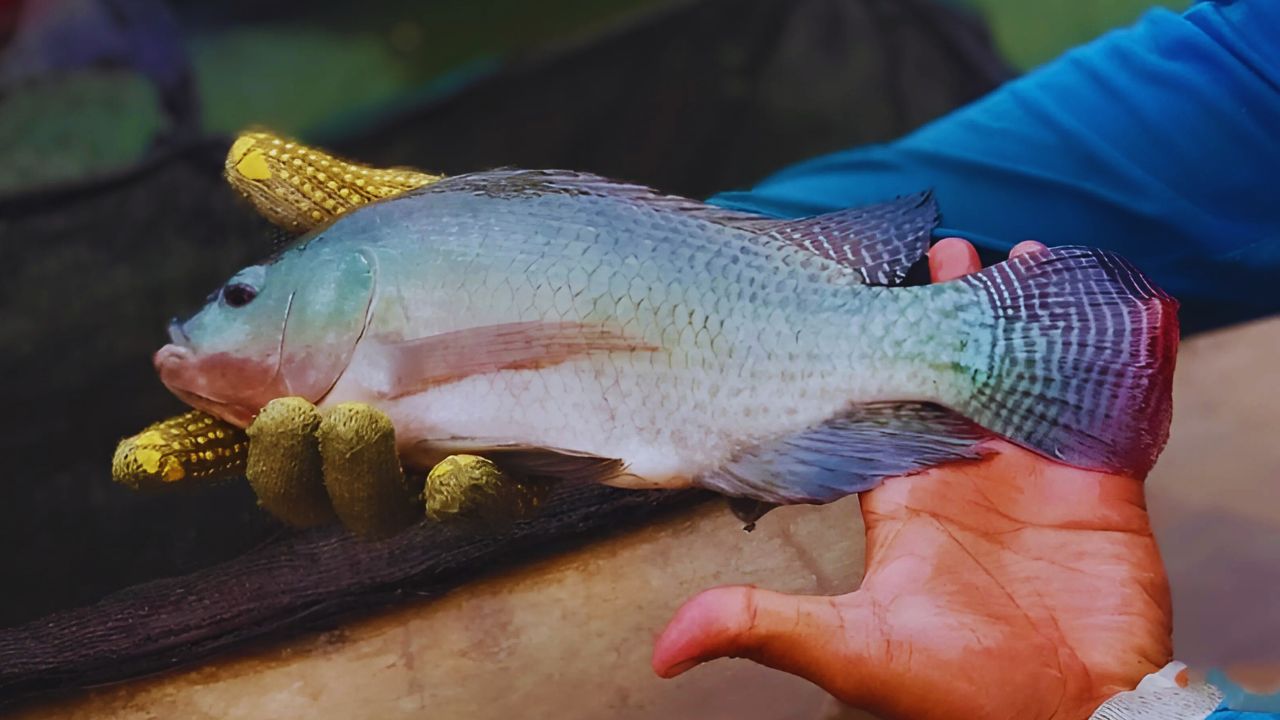

Many of us are familiar with Nile tilapia and Mozambican tilapia. These two fish species are widely consumed and popular in Indonesia due to their delicious meat, which can be prepared in various dishes. Their high market demand has driven interest in farming both species.
However, did you know that many people often mistake Nile tilapia and Mozambican tilapia for being the same? This confusion arises because the two species have a similar physical appearance. But if we take a closer look, we can identify the differences between them. So, what exactly distinguishes Nile tilapia from Mozambican tilapia?
At first glance, there seems to be little difference, as both fish belong to the same genus, Oreochromis. However, upon closer examination, Nile tilapia (Oreochromis niloticus) and Mozambican tilapia (Oreochromis mossambicus) differ in their origins and habitats.
The origins of Nile tilapia
Nile tilapia is a freshwater species native to Africa, specifically from the Nile River and its surrounding lakes. It has a long history as a food source in the region. The fish’s presence in the Nile, one of the world's longest rivers, has made it an integral part of the daily lives of the local people.
Nile tilapia is also found in Africa's major lakes, including Lake Victoria, Lake Tanganyika, and Lake Malawi. In its natural habitat, Nile tilapia thrives in clear and calm waters. Its adaptability to various environmental conditions has made it a popular species for cultivation outside its native range.
The origins of Mozambican tilapia
In contrast, Mozambican tilapia has a different origin. Initially, this species lived in saltwater or brackish environments. It was first discovered in Indonesia by Mbah Moedjair in 1939, in the Serang River estuary, Blitar, East Java. Mbah Moedjair was fascinated by the fish’s behavior of "swallowing" its young to protect them from danger, only to release them when it was safe. He then decided to farm the fish, which was eventually named after him—hence the name "mujair."
Despite being discovered in Indonesia, Mozambican tilapia is not native to Indonesian waters. Its natural distribution is in Africa, particularly in the lowlands of the Zambezi River, the Shire River, and Algoa Bay. As a result, the species is internationally known as the Mozambican tilapia. In its native habitat, the fish lives in brackish waters, typically found in river estuaries that meet the ocean. This allows it to adapt well to changes in water salinity.

Mujair fish, or commonly known as the Mozambican tilapia
The distribution of Nile tilapia and Mozambican tilapia
Today, Nile tilapia and Mozambican tilapia have spread to various parts of the world. Nile tilapia, known for its fast growth and delicious taste when cooked, is now farmed in over 135 countries. It has become one of the most popular aquaculture fish globally, particularly in Asia, South America, and Africa.
Mozambican tilapia has also seen widespread distribution. Currently, it is found in more than 90 countries. Its successful spread is largely due to its adaptability to different environmental conditions, whether in freshwater, brackish, or marine waters. In Indonesia, Mozambican tilapia has become one of the most popular fish species.
Physical differences
The physical differences between Nile tilapia and Mozambican tilapia lie in their body structure. Nile tilapia is generally larger in size compared to Mozambican tilapia. In terms of shape, Nile tilapia has a more rounded and broader body, while Mozambican tilapia has a more elongated body.
Another distinguishing feature is the size of their mouths. Nile tilapia has a smaller mouth, whereas Mozambican tilapia has a larger one. Additionally, Nile tilapia’s face or cheeks are free of spots, while Mozambican tilapia has distinctive spots on its face.
Below is a summary of the physical differences between Nile tilapia and Mozambican tilapia in table form:
Table 1. Physical differences between Nile tilapia and Mozambican tilapia

Economic value
In addition to physical differences, the economic value of Nile tilapia and Mozambican tilapia also varies. Nile tilapia farming is considered more profitable than Mozambican tilapia farming due to consumer preferences for Nile tilapia. Additionally, Nile tilapia grows significantly faster and reaches a larger size compared to Mozambican tilapia.
There are several reasons why Nile tilapia farming is more favored. First, Nile tilapia is more resilient to varying environmental conditions. They can thrive and reproduce in waters with a wide range of qualities. Second, Nile tilapia's rapid growth allows them to reach marketable size in about 4-6 months, enabling faster production cycles and higher yields, which boosts profitability for fish farmers.
Furthermore, Nile tilapia is favored for its taste. Its flesh is known for being delicious and tender, making it popular in both markets and restaurants. The high demand for Nile tilapia keeps its market price stable and profitable for farmers. Another advantage is its flexibility in cultivation methods, as Nile tilapia can be farmed in various systems, including earthen ponds, concrete ponds, brackish water ponds, and even aquaponic systems.
On the other hand, Mozambican tilapia farming requires more careful attention due to the fish's higher sensitivity to environmental changes. Moreover, its slower growth rate, taking 6-9 months to reach harvest size, results in longer production cycles and fewer harvests per year, which can reduce profitability.

Consumer preference for Nile tilapia over Mozambican tilapia: BBPBAP Jepara
Conclusion
Although Nile tilapia and Mozambican tilapia are often mistaken for the same species due to their similar appearance, there are fundamental differences between the two, both physically and economically. Nile tilapia, originally from the Nile River, has a larger, rounder body and a higher economic value. In contrast, Mozambican tilapia, first found in brackish waters and discovered in Indonesia by Mbah Moedjair, has a smaller body and lower economic value.