
Tilapia fish (Oreochromis niloticus) or commonly referred to by Indonesian people as nila, has long been known as a type of freshwater fish that is popular for cultivation. One of the main features of this fish is its ability as an omnivorous fish. As omnivores, tilapia can easily adapt to various types of feed mixed from various sources, including vegetable sources. This adaptability makes tilapia one of the main choices in fish farming, both for commercial purposes and personal consumption.
In this article, we will discuss in detail the nutritional needs of tilapia and feeding techniques at two important stages in the tilapia life cycle, namely the broodstock (parent fish) and larval stages. The main focus of this discussion is to ensure optimal growth and reproduction of tilapia, starting from when the fish is still in the larval stage until it reaches the adult stage.
The importance of understanding the nutritional needs of tilapia cannot be denied. Proper nutrition is essential to support healthy growth and development at every stage of a fish's life. Therefore, we will discuss in detail the needs for protein, carbohydrates and fat in tilapia feed, as well as how to ensure that these nutrients are adequately met at every stage of tilapia cultivation.
Tilapia nutritional requirements
The main nutritional needs of tilapia consist of protein, carbohydrates and fat. Protein is a nutrient that is vital for the growth and development of fish. Protein is a complex substance consisting of essential and non-essential amino acids. In the tilapia body, protein is used as the main source for tissue growth and overall body development. Protein deficiency can cause fish to only use protein sources for basic needs, resulting in stunted growth. However, excess protein should also be avoided because it can cause protein wastage and increase the toxic ammonia content in the water, this can have a negative impact on the tilapia rearing environment.
Furthermore, carbohydrates are an important component in tilapia feed. Carbohydrates are the largest organic group in plants which act as an energy source for fish. In addition, carbohydrates also have a protective effect against protein. Lack of carbohydrates in tilapia feed can inhibit growth because the fish will use carbohydrates as an energy source. Therefore, the carbohydrate content which has a high digestibility rate and the activity of the amylase enzyme in tilapia greatly influences the increase in carbohydrate digestion in the fish's body.
Fat is another important nutrient in tilapia feed. Fat functions as an important source of energy in fish activities, besides that it also helps in the absorption of certain minerals. Fat also has an important role in maintaining the balance and buoyancy of food in water. In tilapia feed, the required fat content ranges from 3-6 percent with digestible energy of 85-95 percent. The presence of fat in tilapia feed is very important to support optimal growth and development of the fish's body.
Feeding tilapia broodstock
The care and feeding of parent tilapia fish, known as broodstock, has a very important role in supporting the growth, reproduction and survival of the tilapia population as a whole. To ensure optimal physical and reproductive conditions, feeding steps for tilapia broodstock are carefully regulated.
First of all, feeding the tilapia broodstock is done twice a day, namely at 09:00 am and 15:00 in the afternoon. This regular and scheduled feeding pattern helps meet the consistent nutritional needs of parent fish, thus supporting optimal growth and reproduction.
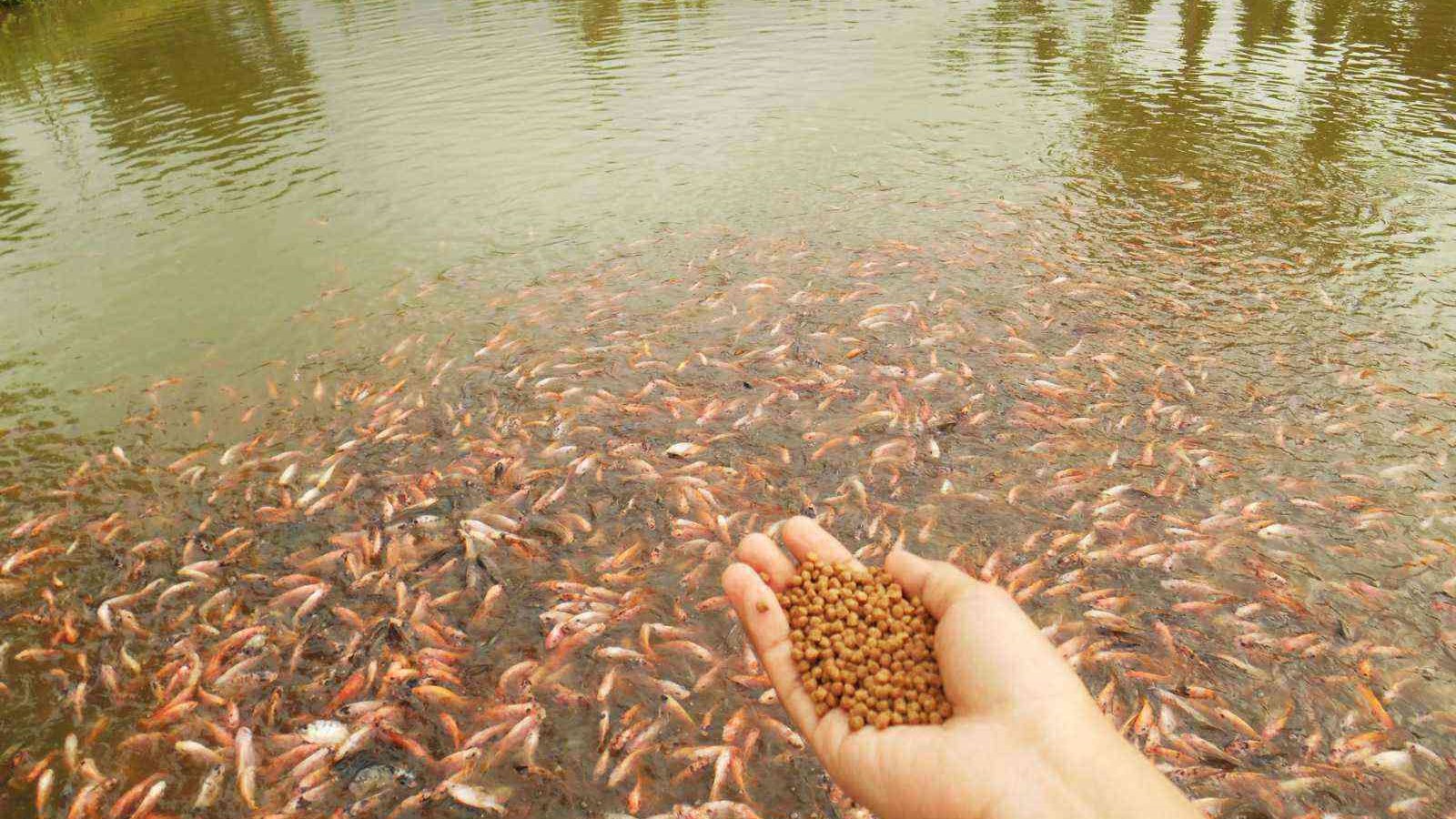
Furthermore, the feed given to the tilapia broodstock is served in the form of pellets that float on the surface of the water. The floating form of feed makes it easier for broodstock tilapia to consume feed, and minimizes the risk of pollution of the aquatic environment due to unconsumed feed residue.

Feed for tilapia broodstock is served in the form of floating pellets
The nutritional content of the feed given to broodstock tilapia is also a major concern. The protein content in the feed must reach the range of 30-35 percent, in accordance with the nutritional needs of tilapia broodstock to support growth and reproductive function. Apart from that, it is also important to pay attention to the dose of feed given, which should not exceed two percent of the broodstock biomass per day. The right dose of feed helps prevent wastage of feed and maintains nutritional balance in the fish's body.
Not only that, adding vitamin E to the feed is also an important step in feeding tilapia broodstock. Vitamin E has a very important role in maintaining the health and reproductive condition of fish, so adding vitamin E to feed can help improve the quality of eggs and development of tilapia larvae.
Feeding tilapia larvae
At the larval stage, tilapia are still classified as carnivores because they require animal protein-based food to support their rapid growth and development. However, as tilapias increase in size and age, they will switch to being omnivorous or herbivorous, meaning that the feed formula they are given will need to be modified to suit their changing nutritional needs. The elements in feed need to be adjusted from animal-based elements such as fish meal powder to plant-based feed ingredients.
Feeding tilapia larvae is carried out through several different stages. First of all, fish larvae that have been harvested from the spawning pool are left for 1-2 days to allow them to absorb the remains of the yolk sac which is their initial source of nutrition. Yolk sac, is a membrane structure that functions as the embryo's circulation system. On the 3rd day, fish larvae begin to be given natural food in the form of phytoplankton because their mouths are still very small. Phytoplankton that is generally given to tilapia larvae includes Chlorella, Scenedesmus, Infusoria, Spirulina, and other types of very small phytoplankton.
When the mouths of tilapia larvae begin to enlarge, this indicates that they have reached a stage of development where they can consume a larger and more varied diet. One type of natural food that is suitable to be given at this stage is zooplankton. Zooplankton are small organisms that move passively or actively in waters and are a natural food source that is rich in nutrients for tilapia larvae.
Some examples of zooplankton that can be given to tilapia larvae include Daphnia, Moina, Tubifex, Rotifera, Artemia, and various other types of zooplankton. This zooplankton usually has a size that fits the enlarged mouth of the tilapia larva, so it can be easily consumed.
Natural food, both phytoplankton and zooplankton, is provided ad libitum. This means that the tilapia larvae are given as much as they need and can consume. This ensures that the tilapia larvae receive sufficient nutritional intake to support their optimal growth and development.
Providing zooplankton as natural food at this stage is very important because zooplankton contains protein and other nutrients which are important for the growth and development of tilapia larvae. By providing natural food in the form of zooplankton, it is hoped that the growth and health of tilapia larvae can be maintained properly, so that they can grow into healthy and productive adult tilapia.

Powder to feed tilapia larvae that are more than five days old
For tilapia larvae that have reached a size of more than five days, a change in the type of feed given is necessary. Apart from natural food in the form of phytoplankton and zooplankton, at this stage larva Tilapia can also be given artificial feed in the form of powder feed containing high protein. This artificial powder feed usually contains a mixture of ingredients that are rich in nutrients, including protein, carbohydrates, fats, and other vitamins and minerals needed for the growth and development of tilapia larvae.
Providing a combination of natural food with artificial food aims to provide a more complete nutritional variety for tilapia larvae. This combination can help meet the diverse nutritional needs of the tilapia larvae's body, thereby supporting optimal growth and development.
Feeding tilapia larvae can be done 3-5 times a day. This aims to ensure that tilapia larvae receive adequate nutritional intake regularly and consistently. Frequent feeding also helps accelerate the growth and development of tilapia larvae.