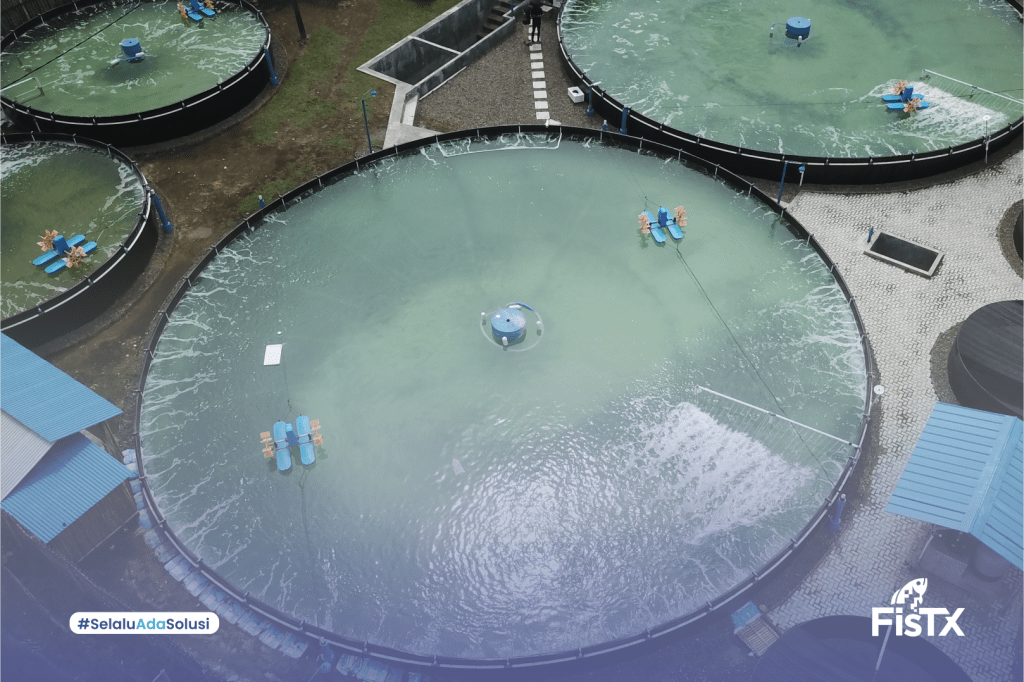
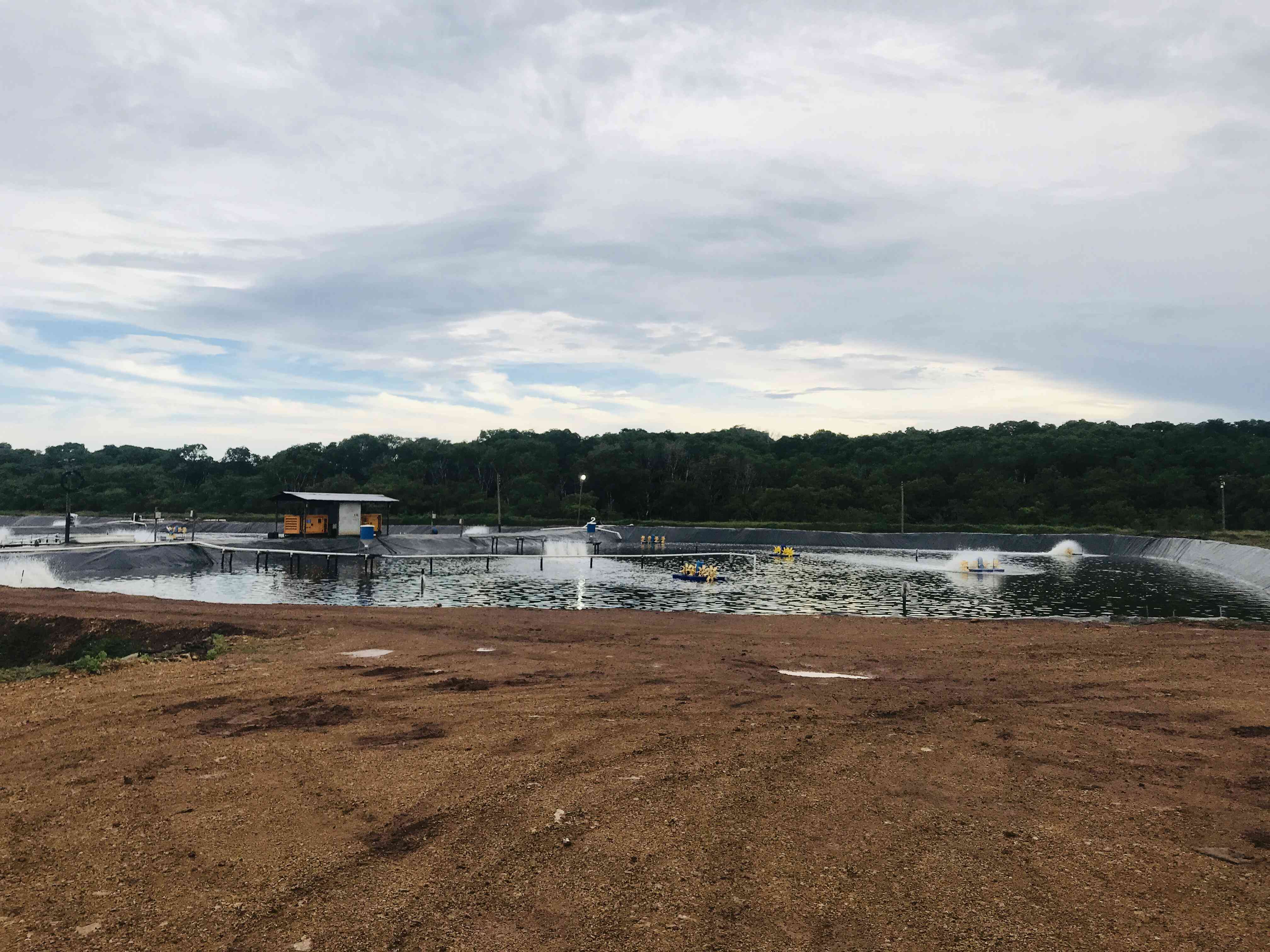
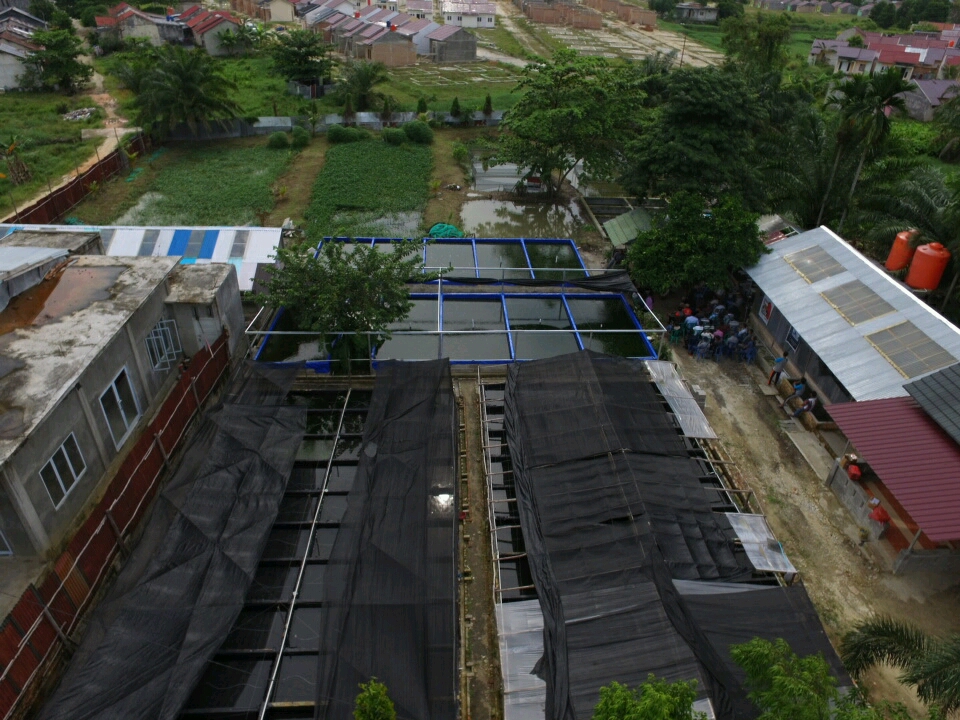
In Pangasius cultivation, whatever cultivation steps are taken, there are three subsystems of cultivation, there is hatchery, nursery, and enlargement. The hatchery is the activity of maintaining the broodfish to produce eggs up to larvae. The nursery is the activity of maintaining Pangasius of a certain size from the hatchery as a transit before being kept in an enlargement place. The enlargement is the maintenance of Pangasius with a certain size from the results of the nursery to producing fish of consumption size.
In the cultivation, the location requirements must have profitable production include water sources, water quality, and soil, as well as water quantity. The criteria for these requirements depending on the cultivation system used. Before determining a cultivation location, apart from these requirements, it is also necessary to ascertain the feasibility of a cultivation location in terms of natural disturbance, pollution disturbance, predator disturbance, security disturbance, and water transport traffic disturbance.
1. Location of floating net cage system
Floating net cage system is carried out in lakes or rivers by considering technical and socio economic factors. The placement of floating net cages in public waters is recommended in horizontal flow paths, in estuary areas, because the water supply is sufficient and dissolved oxygen content is also high. In addition, the water flowable to wash away the remaining dirt and organic matter. The criteria for the quality of catfish culture water in the cage are as follows:
Criteria
- Physics
Temperature 20-30 °C, maximum total dissolved solids 2,000 mg/L, brightness more than 45 cm.
- Chemistry
pH 6-9, maximum dissolved oxygen 8 hours per day, minimum 3 mg/L, free carbon dioxide maximum 15 mg/L, ammonia maximum 0.016 mg/L, nitrite maximum 0.2 mg/L, copper (Cu) maximum 0, 02 mg/L, zinc (Zn) maximum 0.02 mg/L, mercury (Hg) maximum 0.002 mg/L, lead (Pb) maximum 0.3 mg/L, free chlorine (Cl2) maximum 0.003 mg/L, phenol maximum 0.001 mg/L, sulfide maximum 0.002 mg/L, cadmium (Cd) maximum 0.01 mg/L, fluoride maximum 1.5 mg/L, arsenic (As) maximum 1 mg/L, selenium (Se) maximum 0.05 mg/L, hexavalent chromium (Cr+6) maximum 0.05 mg/L, cyanide (Cn) maximum 0.02 mg/L, oils, and fats maximum 1 mg/L.
Disturbances that may hold up the cultivation of floating net cages media include:
1.1. Natural disturbances
The problem that threatens fish culture in floating net cages in the water flooding, in the form of a sudden increase in water mass from the bottom to the surface. This happens at the beginning of the rainy season when there is a sudden drop in temperature in the surface layer due to sudden heavy rain. This does not have a bad effect on clear water, whereas waters that are basically dirty, contaminated with waste (including fish feed waste) can threaten the life of the fish. The water mass that rises to the surface will carry toxic compounds that will harm fish cultivation.
1.2. Pollution disturbance
The location of fish culture in rivers and swamps is very prone to water pollution, which mainly appears at the peak of the dry season and the beginning of the rainy season. Pollution can occur because:
- The process of rotting roots or plants causes water to tend to be acidic and usually occurs in swampy areas at the beginning of the rainy season.
- Chemical and energy pollution from factory waste and agricultural land.
- Pollution by domestic or household waste.
1.3. Predatory distraction
Because the enlargement is usually in an open place, it is likely that pests or predators will be attacked. Pests or predators that often attack are linsang (weasel), lizards, water snakes, turtles, and birds. Effective eradication methods by killing them, setting traps, installing poisonous bait, and clearing the enlargement area like grass or shrubs that become predators' nests.
1.4. Security disturbances
Security disturbances at the location need to be taken seriously by placing guards, especially at night. For this reason, the floating net cages cultivation location, it is necessary to make it to be a closed place with a padlock on the top cage which also functions as a feeding hole.
1.5. Water transport traffic disturbances
If the location of the floating net cages is in a river which is the route for water transportation, then it must be placed on the riverside, so that it does not interfere with the transportation route. The construction of the floating net cages must be made strong enough so that it is not disturbed by waves which caused of water transportation traffic.
2. Floating net cages construction
The shape of the floating net cage is a square that is open at the bottom with a size of four meters on each side and given afloat. The inside of the cage is inserted with a net tied to the cage wall, as a container for the Pangasius that is kept. The size of the mesh hole is smaller than the size of the seeds that are stocked. A floating net cage is placed on the riverside in groups. Between each cage, a connecting road is made. The two ends of the bamboo are tied to a pole that is stuck to the bottom of the river as a barrier so that the cage is not floating away by the water flow. For each group, a hut is made above as a shelter for officers on duty and laying fish feed.
3. Provision of seeds
Pangasius is one type of fish that is difficult to breed naturally because it is difficult to create or manipulate an environment that is suitable for its natural habitat. Therefore, for the production of seeds, artificial spawning or induce breeding using the pituitary gland of goldfish or gonadotropin hormones imported under the trade name Ovaprim. The size of the seeds purchased is 1.5-2 inches, but if more seeds are needed then the seed size purchased is 1-2 inches. Floating net cages usually cultivators buy seeds from distributors.
4. Maintenance
As explained earlier, the stages of activity in Pangasius farming include a hatchery, nursery, and enlargement. The floating net cages system, usually used only for enlargement. Hatchery and nursery are rarely used, but it is usually applied to small-scale ponds either in hatcheries or soil ponds. Therefore this article does not explain the nursery method in the floating net cages system. At the enlargement stage, the size of the seeds stocked in the cages should have reached a minimum weight of 50 grams per head or 2.5-3.5 inches long. The seeds that are stocked should have the same size and age. If there are those who are bigger or older, it is feared that they will dominate other seeds, both in competition for life and in competition for food. The recommended seed stocking density is about 10 fish/m2.
So that the Pangasius fish that are spread in the floating net cages do not experience stress, the distribution of seeds should be done in the morning or evening when the temperature is low. The spread is carried out by acclimatization, is the seeds that are in the transport plastic bag are left to float on the water for 5-10 minutes. Furthermore, the plastic bag is opened and the water from the floating net cage is added gradually into the bag until the condition of the water in the bag is the same as the condition of the water in the floating net cage. This acclimatization process is complete when the fish in the plastic bag leaves by itself into the cage.
5. Feed
Feed must receive serious attention because feed greatly affects the weight growth of the fish and it is the largest part of the operational costs in raising Pangasius. Based on the research results of fisheries experts, to accelerate the growth of fish during enlargement, Pangasius fish need to be given additional food in the form of pellets as much as 3-5% of their total body weight every day. Feeding is done in stages four times, morning, afternoon, evening, and night. The portion of feeding at night should be more than in the morning, afternoon and evening, because Pangasius are more active at night. The type of feed used is floating feed, this is done so that the spread of feed does not sink through the cage media so that feeding is more effective.
6. Pest control
Pest attacks generally in nursery and enlargement because these activities are carried out in the open place, while hatchery is in the closed rooms. The pests are larger and predatory in nature, so they are physically easily recognized. The types of pests and how to eradicate them have been described before. Diseases that often attack Pangasius consist of two groups, infectious diseases that arise due to interference by pathogenic organisms and non-infectious diseases that arise due to other organisms. The causes of infectious diseases are parasites, bacteria, and fungi that can be transmitted. Meanwhile, the causes of non-infectious diseases are poisoning and malnutrition.
7. Harvest
Generally, harvesting can be done after 6-12 months after entering the enlargement phase when the fish reach a weight of one kilogram. Harvest the fish selectively because the fish growth is not uniform. How to harvest Pangasius is by using a scoop, net pole or other fishing gear. Handling when harvesting must be careful to avoid injury because it can reduce the quality and selling price of fish. Don't harvest it by bare hand because it can be injured by the streak or spines of the fish's fin. To maintain the quality of harvested fish, the day before harvesting, feeding is usually stopped. The harvested Pangasius are put in a container that has been filled with clear water to make the fish stay alive and less stressed.