
Pangasius fish has emerged as a cornerstone of the global aquaculture industry, recognized as one of the most sought-after freshwater species in international markets. Beyond its economic significance, this species plays a vital role in maintaining the balance of freshwater ecosystems. Spawning and hatching are foundational processes that ensure the sustainability of pangasius populations and the quality of fingerlings, which form the backbone of this aquaculture industry.
Spawning, whether natural or artificial, represents a critical stage in the pangasius life cycle. Natural spawning showcases the remarkable instincts of nature, where male and female fish respond to seasonal cues to release their gametes (eggs and sperm) into the aquatic environment. In contrast, artificial spawning reflects the synergy between human ingenuity and the biological needs of the fish, enabling optimized reproductive outcomes.
This article delves into the intricacies of both spawning methods, covering everything from broodstock selection to the hatching of eggs into larvae. By comprehensively understanding these processes, readers can gain valuable insights into how the aquaculture industry leverages science and technology to ensure the sustainable production of pangasius.
Natural spawning
Natural spawning in pangasius, though increasingly rare in aquaculture, remains a fascinating process where reproduction occurs without human intervention or hormonal stimulation. In their natural habitats, pangasius fish exhibit well-coordinated spawning cycles, allowing for optimal reproduction. This process begins with the careful selection of broodstock that have reached gonadal maturity. Only individuals in prime physical condition are chosen to initiate spawning.
Once the broodstock is selected, they are kept in controlled environments designed to mimic ideal spawning conditions. This includes adjustments to water temperature, pH levels, and other environmental factors to create a conducive setting for reproduction. During this preparation phase, the broodstock receives meticulous care, including a nutritious diet and supplements to enhance reproductive health.
When conditions are optimal, male and female broodstock are introduced into a spawning tank or pond. In this natural environment, the fish engage in instinctive spawning behavior. The female releases her eggs, which are then fertilized by the male’s sperm.
Although natural spawning is largely autonomous, human oversight is essential to ensure a supportive environment. This includes monitoring water quality, minimizing stress, and providing additional feed if necessary. The culmination of this process is the hatching of fertilized eggs into larvae, signaling the successful completion of natural spawning and the beginning of a new life cycle for pangasius.
Artificial spawning
Artificial spawning is a controlled reproduction technique widely used in pangasius aquaculture to ensure consistent and high-quality fingerling production. The process begins with selecting broodstock—both male and female—that have reached gonadal maturity. This selection is typically performed in the morning to maximize the likelihood of choosing fish in optimal condition.

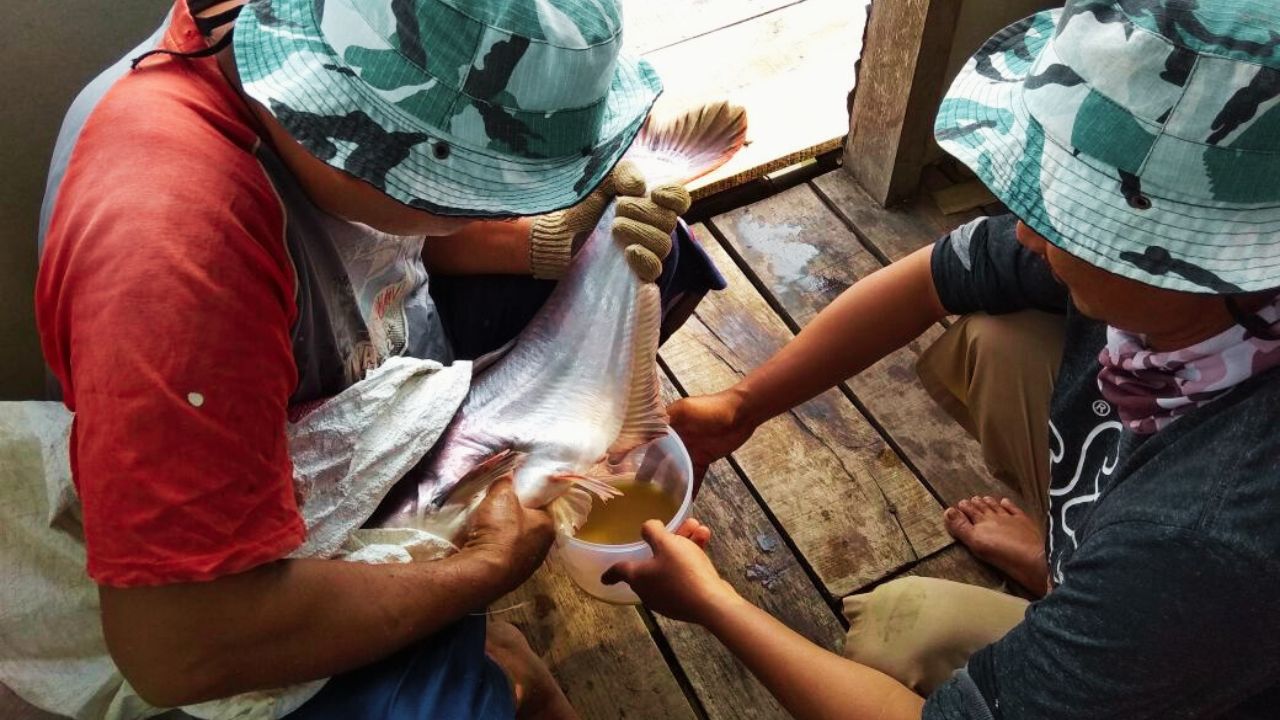
Hormone injection is a critical step to induce ovulation and ensure successful reproduction: BPPSDMKP
Before proceeding with hormone injection, the broodstock is carefully weighed to determine the appropriate dosage. Ovaprim, a commonly used hormone stimulant, is administered at different dosages for males and females: males receive 0.2 ml/kg of body weight, while females are given 0.6 ml/kg. The hormone is injected intramuscularly at the base of the fish’s dorsal fin, ensuring proper depth and angle for optimal absorption.
The hormone injection process involves two stages, spaced six hours apart. The first injection typically delivers about one-third of the total recommended dosage, while the second provides the remaining two-thirds. This staggered approach ensures sufficient hormonal stimulation to trigger spawning while maintaining the broodstock's hormonal balance.
To minimize stress during the artificial spawning process, anesthesia is employed at key stages, including broodstock selection, hormone injection, and spawning. Benzocaine (C₉H₁₁NO₂) is commonly used, dissolved in water at a concentration of approximately 100 ppm. This anesthetic protocol ensures that the fish experience minimal discomfort and stress, contributing to a smoother and more efficient spawning process.
Careful administration of anesthesia helps reduce stress-induced complications, ensuring the broodstock remains calm and in optimal condition for reproduction.
Ovulation typically occurs 6-8 hours after the second hormone injection, depending on environmental conditions. Temperature plays a crucial role in this phase, with the ideal range being 27-31°C. Maintaining these conditions supports optimal reproductive responses, enhancing the success rate of artificial spawning.
After ovulation, the next step in the artificial spawning process is to confirm that the eggs have been released. This is done by gently massaging the area around the genital opening of the broodstock. If some eggs are expelled, it indicates that ovulation has occurred and the eggs are ready for fertilization.
Once the release of eggs and sperm is confirmed, the artificial fertilization process begins. Eggs and sperm are mixed in a solution of either NaCl or Ringer’s solution at a specific ratio. These solutions provide an optimal ionic environment for fertilization and early embryonic development, ensuring that the gametes interact under ideal conditions.
To ensure the fertilized eggs develop properly, they are treated with a clay solution. This step helps reduce the adhesive properties of the eggs, preventing them from clumping together during incubation. Maintaining separation between the eggs is critical to avoid developmental issues and ensure uniform growth.

The eggs are properly washed by rinsing with running water to eliminate any residue clay solution used previously: BPBAT Tatelu
Following fertilization and clay treatment, the eggs are placed into incubation funnels, commonly referred to as McDonald jars. Each jar contains eggs and sperm from the same broodstock pair to maintain genetic consistency and ensure high-quality offspring.
During incubation, water is circulated through the jars to keep the fertilized eggs evenly dispersed. This ensures that each egg receives sufficient oxygen and nutrients for optimal growth. The incubation temperature is carefully controlled, typically maintained at 29-30°C, which is ideal for embryo development. The incubation period lasts 18-24 hours, during which the fertilized eggs develop and eventually hatch into larvae.

The McDonald's jar is designed to facilitate water circulation, ensuring that the eggs are suspended and equally oxygenated: BPBAT Sungai Gelam
Artificial spawning offers several advantages over natural spawning, including faster processes and higher egg production. It provides a more controlled environment, which is essential for scaling up pangasius fingerling production. However, the use of hormone stimulants in artificial spawning requires careful dosage management and a thorough understanding of their potential impacts on fish health and the environment.