
Tilapia cultivation has become a very promising sector in the fishing industry. Success in cultivation is influenced by various factors, but one of the most crucial is the selection of quality tilapia seeds. The seed factor plays a key role in the success of tilapia cultivation, because good seeds will produce higher quality fish and provide more satisfying economic value. Choosing superior seeds not only has an impact on the growth rate and health of fish, but also directly affects production efficiency and profitability of the cultivation business. In this article, we will discuss in more detail the characteristics of superior tilapia seeds and broodstock and the importance of these factors in supporting the success of tilapia cultivation.
1. Size and shape of the seed body
One of the main characteristics of superior tilapia seeds is their size and body shape. Ideal body size and shape are important indicators in determining the quality of seeds to be cultivated. Generally, tilapia seeds that are good for rearing have a size of 10-20 grams per fish with an age of between 30 and 60 days. This size is considered ideal because fry of this size show a sufficient level of maturity to adapt to the new environment when transferred to the rearing pond. Good adaptability is very important to reduce stress levels in seeds, which in turn will minimize death rates.
Proportional body shape is also an indicator of the health and quality of tilapia seeds. Fry that have a good body shape indicate that the fish are growing in optimal conditions, getting enough nutrition, and not experiencing serious health problems. A proportional body shape, usually characterized by a round body that is not too thin or too fat, reflects that the seed has the potential for faster and more even growth. This is important because seeds that grow quickly and evenly will be more efficient in converting feed into body mass, thereby reducing feed costs and increasing profits for farmers.
Apart from that, seeds with ideal size and body shape also indicate that they come from quality parents. Healthy and superior parents will pass on good genetics to the fry, ensuring that the fry have the potential to grow into healthy and productive adult fish.
2. Rapid growth
The quality of tilapia seeds can also be identified by their growth speed. Growth speed is a key indicator that shows that the fry have good potential to develop into healthy and productive adult fish. Good seeds will show fast and uniform growth, where all individuals in the seed group grow at almost the same rate without anyone being too behind or too advanced. This uniform growth indicates that the seeds have superior genetics and were raised in an optimal rearing environment.
In the context of cultivation, rapid growth has very important implications. Firstly, rapid growth means fish can reach harvest size in a shorter time. This is very beneficial for farmers because the shorter maintenance time means operational costs, such as feed costs, labor and pond maintenance, can be reduced. In this way, production efficiency increases and profits can be achieved more quickly.
Apart from that, rapid growth also allows cultivators to increase the frequency of production cycles in a year. With more production cycles, cultivators can utilize existing facilities and resources more effectively, thereby increasing total production output within a certain time period. This not only increases income, but also helps meet the ever-increasing market demand for tilapia.
Uniform growth also reduces the risk of unequal competition among fish in the pond. When all fish grow at the same rate, they have an equal opportunity to find food and space, reducing the chance of slower-growing fish outcompeting them. This balanced competition is very important to ensure that all fish in the pond can reach their optimal growth potential.

Tilapia fish with good growth
3. Seeds are more active and agile
Seed activity and agility are also important indicators in assessing the quality of tilapia seeds. Good seeds usually look more active and agile, especially when given stimulation or feed. Active movement shows that the seeds are in healthy condition and are not experiencing stress. On the other hand, seeds that are less active may be experiencing health problems or are not suitable for the environmental conditions in the pond.
Activity and agility are signs that the fish's metabolic system is functioning well. Active fish tend to have efficient metabolisms, which means they can utilize feed optimally for growth and energy. Fast and responsive movement when fed also reflects a good appetite level, which is very important for fast growth and excellent physical condition.
Apart from that, the agility of the fry can also be an indicator of the fish's adaptability to its new environment. Lively fish show that they feel comfortable and not stressed in their habitat. This is very important because excessive stress in fish can stunt growth, lower immunity, and make fish more susceptible to disease. Therefore, paying attention to fish activity and agility is an effective first step in identifying potential health problems or environmental unsuitability that may exist.
4. There are no defects or injuries on the body
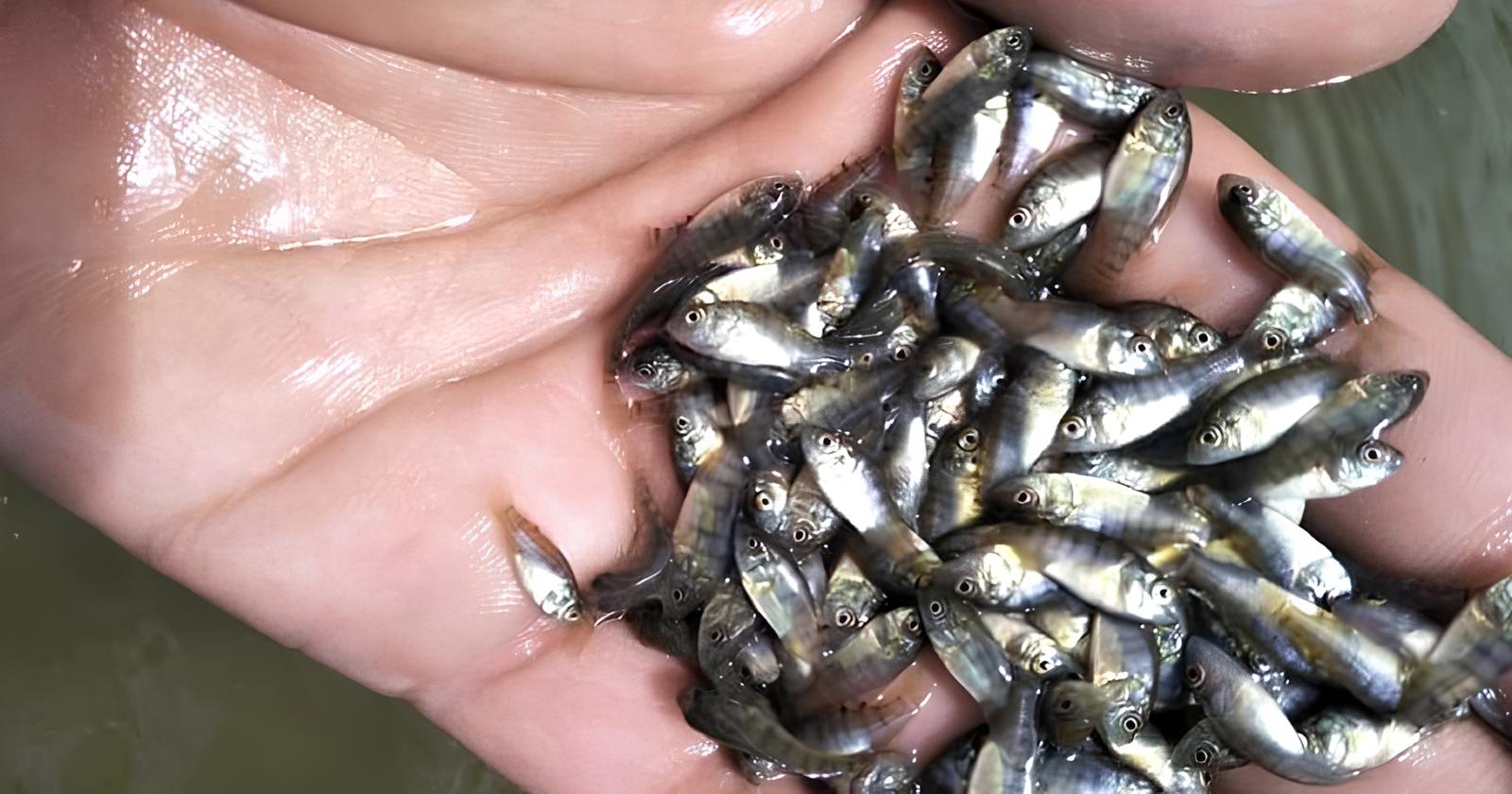
The quality of tilapia seeds can also be seen from their physical condition. A superior seed is characterized by a perfect body without defects or wounds. This physical condition is very important because wounds or defects in the seeds can be an entry point for disease, whether caused by viruses, bacteria or parasites. Injured fry are more susceptible to infection, which can spread rapidly in fish populations and cause serious health problems.
Physical defects in tilapia fry not only invite disease but can also inhibit fish growth. Fry with physical defects usually have difficulty moving, finding food, and interacting with other fish. As a result, their growth is not optimal, because energy that should be used for growth and development is instead wasted on adapting to these handicapped conditions. In addition, the conversion of feed into body mass is also less efficient in fish that have physical disabilities. This means more feed is needed to achieve desired growth, thereby increasing cultivation operational costs.

Tilapia fish seeds without defects or wounds
5. Resistant to pests and diseases
Resistance to pests and diseases is also an important factor in selecting superior tilapia seeds. Seeds that are resistant to disease will have a higher survival rate, which is very important in ensuring successful cultivation. In tilapia cultivation, pest and disease attacks can become serious problems causing crop failure and significant financial losses.
Disease resistance includes the ability of seeds to resist infections from viruses, bacteria, and parasites. Common diseases that attack tilapia include: Streptococcosis, Columnaris, and Aeromonas. Seeds that are resistant to this disease will show minimal symptoms and have a faster recovery rate compared to susceptible seeds. This is important because untreated diseases can spread rapidly in fish populations, causing mass deaths and large production losses.
6. Can live and grow well in aquatic environments
The final characteristic that superior tilapia seeds must have is their ability to live and grow well in aquatic environments. These capabilities include good adaptation to environmental conditions, significant growth rates, and high survival value in cultivation environments. Good seeds will show a positive response to a clean aquatic environment and suit the physiological needs of tilapia fish, thus supporting optimal growth and producing good quality fish.
An ideal aquatic environment for tilapia cultivation must meet several important criteria. Water quality is the main factor that influences fish health and growth. Parameters such as temperature, pH, dissolved oxygen content, and ammonia levels must be maintained within optimal ranges. Tilapia is known as a fish that is tolerant of various water conditions, but to achieve maximum growth, stable and optimal water conditions are very necessary. The ideal water temperature for growing tilapia is between 25-30 degreesCelsius, with a pH of around 6.5-8.5. Adequate dissolved oxygen is also very important to support metabolic processes and fish health.
Superior tilapia seeds will be able to adapt quickly to changes in the aquatic environment. Good adaptation is important because in cultivation practices, changes in water conditions can occur due to weather, feed management, or other external factors. Seeds that have good adaptability will experience lower stress, so the risk of death is also reduced. Rapid adaptation also allows fish to immediately utilize existing resources in the pond, such as food and space, to support their growth.