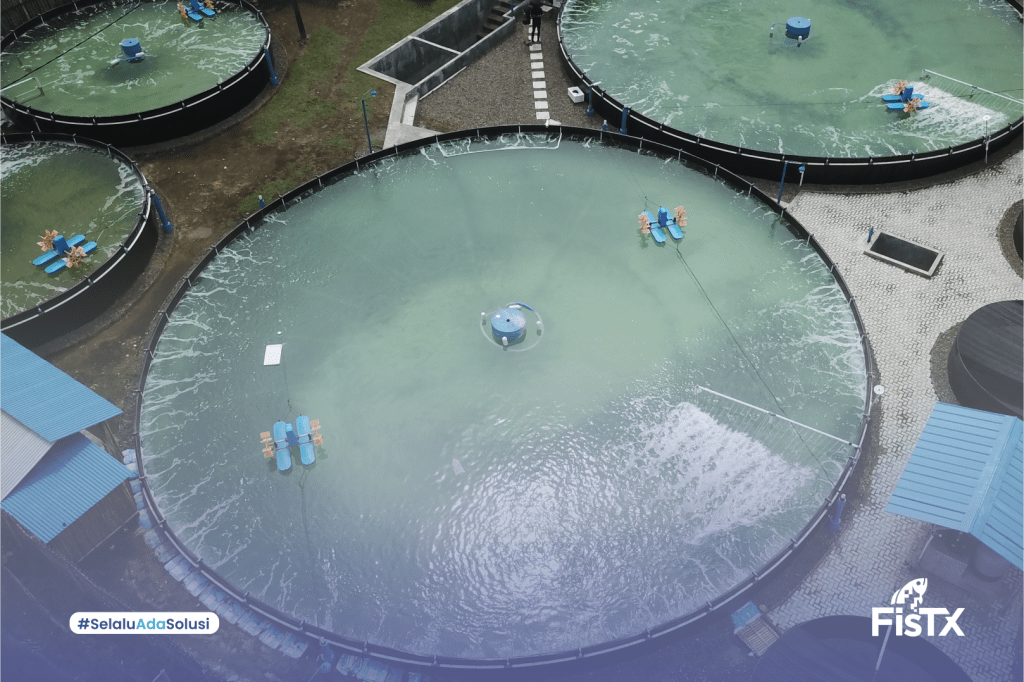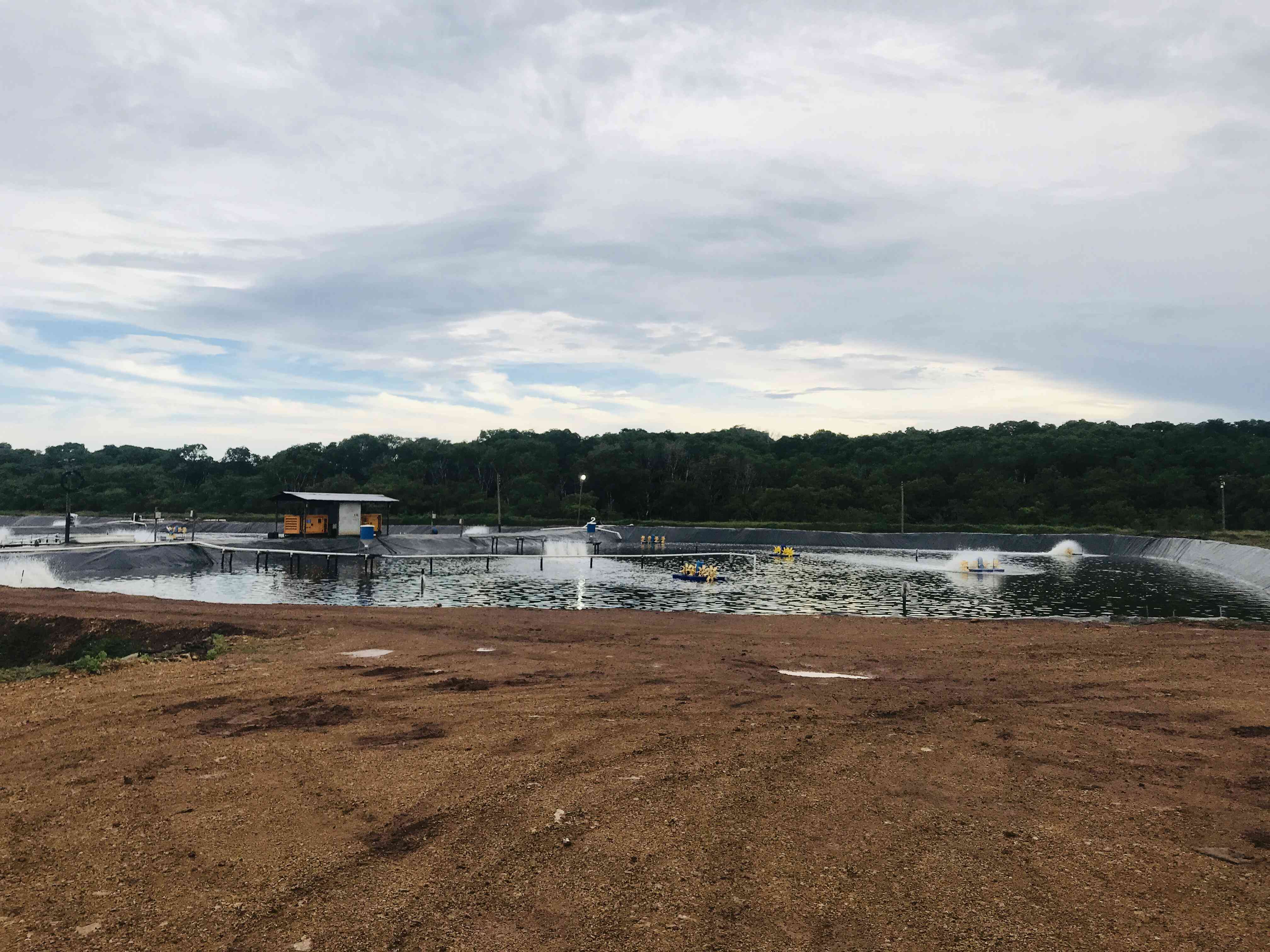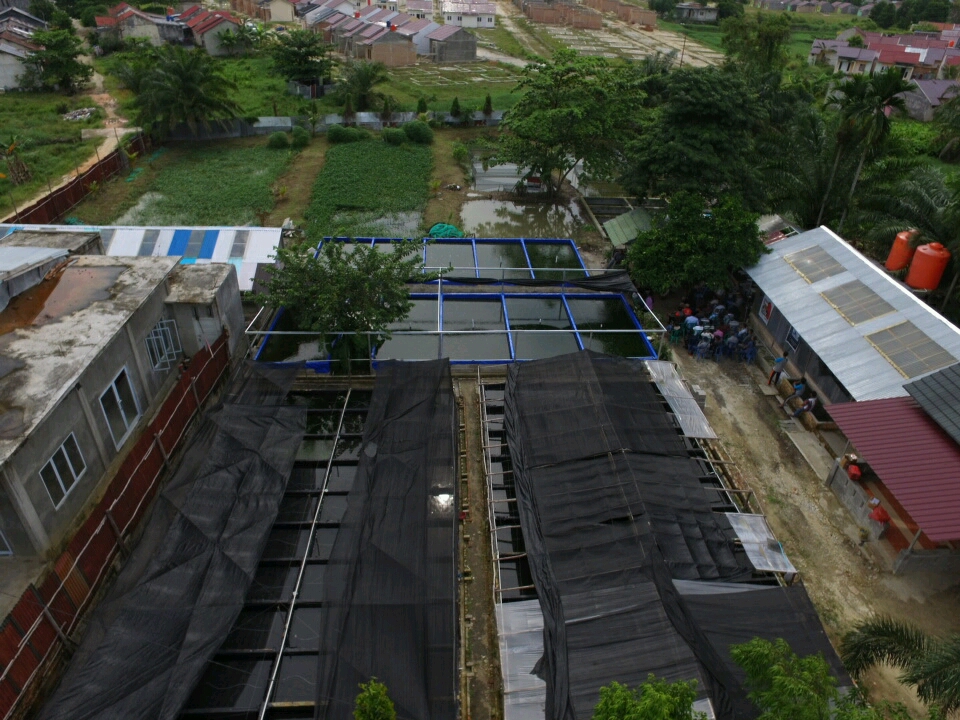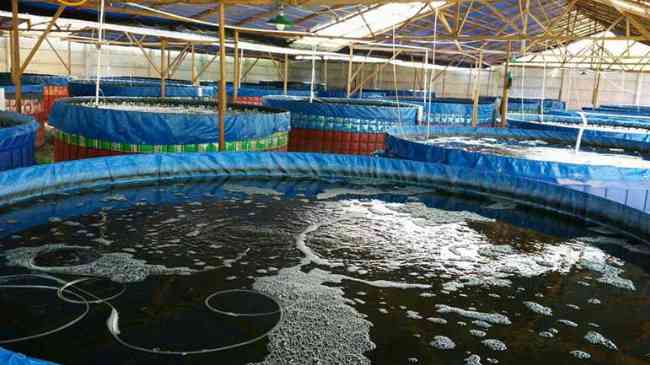

Vannamei shrimp is a potential fishery product to be developed because it is able to generate foreign exchange for the country. Vannamei shrimp have various common names, such as pacific white Shrimp, camaron blanco, and langostino. Vannamei shrimp have physical characteristics such as softer and smoother skin compared to other types of shrimp such as tiger prawns which have harder and thicker skin. Transparent colors, when raised to the surface of the water, quickly weaken and die, and are responsive to light.
Shrimp is one of the foods that contain high nutrition and iodine which is needed for physical and mental growth. The nutritional content in shrimp is very complex including Energy, Protein, Fat, Carbohydrates, Calcium, Phosphorus, Iron, Vitamin A, Vitamin B, Vitamin C and Water. So that processed foods made from raw shrimp are very useful and healthy for the human body.
The world market demand for vannamei shrimp tends to increase every year. In addition, the sufficient resources available in Indonesia provide a very large opportunity for cultivation to be developed. Coordinating Minister for Maritime Affairs and Investment Luhut Binsar Pandjaitan stated that the government is targeting vannamei shrimp exports to increase by 250 percent by 2024.
From the large demand for vannamei shrimp above, of course we as entrepreneurs or shrimp cultivators must be even more active in producing vannamei shrimp. However, vigorous effort alone is not enough. We must carefully consider the vannamei shrimp farming business whether it is feasible or not to run. Therefore, we need to analyze the feasibility of the business before or after we run it. Business feasibility analysis serves to determine whether a business is feasible or not. This is important to do so that a business that is being pioneered or developed avoids losses. Errors in planning a business will result in swelling investment. This can also happen if the business owner wants to develop a business that has been running without careful calculation (Karim, 2012). Investment criteria are used to measure the benefits obtained and the costs incurred from a project. In measuring the benefits of a project, two ways can be used, namely:
- Discount calculation is a technique that can "reduce" the benefits obtained in the future and the flow of costs to the value of costs in the present
- Undiscounted calculation is an undiscounted calculation model that has a general weakness compared to discounted calculations, namely the size has not fully considered the length of the flow of benefits received (Maulana, 2008).
The difference between these two methods lies in the concept of Time Value of Money used in the discounted calculation model. Before analyzing the feasibility of vannamei shrimp farming, we should first know the terms used in the feasibility analysis of a business. These terms include:
1. Investment cost
Investment costs are the costs of purchasing capital goods and manufacturing equipment for investors in order to increase the ability of a business to produce goods and services that can be used in the economy. Investment in the broadest sense is sacrificing dollar for dollar in the future.” Investments can be made in various business fields (Lano, 2018). One of its fields of business is vannamei shrimp cultivation.
2. Production cost
Production costs are all expenditures made by the company to obtain production factors in order to produce output. According to Saeri (2018), the types of production costs are as follows:
- Total Fixed Cost (TFC) is the cost incurred by the company or farmer that does not affect the output or production. Regardless of the amount of output produced, the fixed costs are the same.
- Total Variable Cost (TVC) is a cost whose amount changes in the direction of the change in the amount of output produced.
3. Reception
Revenue is a function of the number of goods, also the product of the number of goods and the price of goods per unit. In analyzing costs generally cannot be separated from the analysis of revenue or revenue or total revenue. Understanding revenue or acceptance is all income received from the sale of goods at a certain price level. In simple terms, producers will get revenue from every output sold. This revenue can be used to pay for costs incurred during the production process (Mafut, 2017).
4. Income
Revenue is the difference between revenue (TR) and total cost (TC). Revenue is an inflow or other increase in the assets of an entity or the settlement of liabilities (or a combination of both) during a period from the delivery or production of goods, the provision of services that are the entity's ongoing main or central operations (Bastian, 2015). In the theory of economics, income or profit is the result in the form of money received by companies/individuals from their business activities. Revenue is an inflow of economic benefits arising from the normal activities of the entity during a period, if the inflow results in an increase in equity that does not come from contributions (Mafut, 2017).
5. Break Even Point (BEP)
Break Even Point (BEP) or the break-even point or often also called the break-even point is a method that studies the relationship between costs, profits, and sales or production volume. This relationship is also known as CBV (Cost-Profit-Volume) analysis to determine the minimum level of activity that must be achieved, where at that level the company neither gains nor loses (Pulungan et al, 2015).
There are three types of BEP calculations, namely volume BEP, production price BEP and Revenue BEP. Formulated as follows:
- BEP Volume (Kg) = Total operating costs Sales Price

- BEP Harga (Rp/Kg) = Total operating costs Total Production

Test criteria: What is the break-even point if the value of each variable is higher than the BEP (Break Even Point) calculation results (Pulungan et al, 2015).
6. Revenue Cost Ratio (R/C Ratio)
R/C is a comparison between revenues and costs to see the relative profit of a business in one year against the costs used in these activities. A business is said to be feasible if the R/C is greater than 1 (R/C > 1). The details are as follows:
- Ho ratio < 1, it means that vannamei shrimp cultivators operated by farmer groups are not suitable for cultivation. = TR - TC R/C = Total Revenue Amount Expenditure
- Ha ratio >1, meaning that vannamei shrimp cultivators managed by farmer groups are feasible to cultivate (Utomo et al, 2012).
This illustrates that the higher the R/C value, the higher the profit level of a business (Jamaludin, 2015).
7. Benefit Cost Ratio (B/C Ratio)
Benefit Cost Ratio (B/C Ratio) Is a measure of the comparison between income (Benefit = B) and total production costs (Cost = C). Within the limits of the B/C value, it can be known whether a business is profitable or not (Lano, 2018).
8. Return On Investment (ROI)
Return On Investment (ROI) in financial analysis has a very important meaning as one of the comprehensive/comprehensive financial analysis techniques. Return On Investment (ROI) is a ratio that measures the company's overall ability to generate profits with the total amount of assets available within the company (Syamsuddin, 2009).
9. Net Present Value (NPV)
Net present value (NPV) is the present value of net profits (additional net benefits) that will be obtained in the future. NPV is the difference between the present value of the benefit stream minus the present value of the cost stream. The assessment criteria for the net present value (NPV) are as follows. 1) If NPV > 0, the business being run is feasible. 2) If NPV < 0, the business being run is not feasible. 3) If NPV = 0, the business that is run does not lose and does not make a profit (Saebani, 2018).
10. Internal Rate of Return (IRR)
The IRR criterion is the criterion used to measure the efficiency of the use of capital by comparing the IRR value with the discount rate (interest rate). If the IRR is greater than the predetermined interest rate then the business is feasible to run, but if the IRR is less than the interest rate then the business is not feasible; Meanwhile, if the IRR is the same as the determined interest rate, then the business is feasible to carry out (Triyanti and Hikmah, 2015).
11. Payback Period (PP)
Payback Period (PP) is a period of return of the total amount of investment invested, calculated from the start of the project to the additional net production flow, so as to reach the total amount of capital investment invested using cash flows (Rohmawati, 2010). 2010).
12. Sensitivity Analysis
Sensitivity analysis is an analysis carried out to determine the effect of changes in production parameters on changes in production system performance in generating profits. By conducting a sensitivity analysis, the possible consequences of these changes can be known and anticipated beforehand. This analysis is used to determine the extent of the sensitivity level if there is a change in several cashflow component variables on the income and benefits obtained by the company (Lano, 2018).
The feasibility analysis of vannamei shrimp farming can be identified from several aspects, including market aspects, technical aspects, production facilities aspects, management aspects, socio-economic and environmental aspects. Here's a full explanation:
1. Market aspect
The feasibility analysis of vannamei shrimp farming is said to be feasible if the market potential is large. This is seen from the side of demand, supply, and price. The amount of demand that is not balanced by the amount of supply creates great opportunities in the vannamei shrimp farming business. In addition, the high selling price is also quite promising that the vannamei shrimp cultivation business can bring profits.
2. Technical Aspect
Analysis in the technical aspect includes the location of the business, the size of the business, the type of machine selection, the production process, and the accuracy of the technology used. Pond productivity is considered to be poor in terms of the applied semi-intensive technology. For example, yields from the four plots with subgrade soil ranged from (1,260 – 1,955) kg or productivity (2,520 – 3,910) tons/hectare. In general, semi-intensive shrimp farming technology produces an average of 8.2 tons/hectare. Meanwhile, pond productivity is said to be very good seen from the semi-intensive technology applied with technological improvements. For example, yields from the four plots with improved technology using plastic layers ranged from (5,478 – 7,732) kg. or productivity (10,956 – 15,464) tons/hectare.
3. Aspects of Production Facilities
The success of shrimp farming is determined by the production facilities, both quality and quantity, the availability of production facilities with poor quality, resulting in production results not meeting the target, small shrimp, feed conversion of more than 1.7 and low productivity Production facilities are a very important component of the whole process of shrimp cultivation, then this variable is the dominant/significant variable in determining the location of the pond.
4. Organizational and management aspects
The organizational structure that can be applied by cultivators is referring to the organization of government institutions under the directorate general of aquaculture, the Ministry of Marine Affairs and Fisheries. The division of tasks for the sections and sub-sections of administration as structural officials is responsible to the head of the hall. The functional group consists of engineering technical officers, fisheries supervisors, fish pest and disease control and engineering technicians in charge of conducting research/engineering activities in the field of fisheries and seed supervision as well as pest and disease monitoring.
5. Socio-economic aspects
The existence of vannamei shrimp farming activities cannot be separated from social changes in society, one of the changes in society is the addition of work opportunities. Where, the need for manpower for the basic preparation stage of ponds that use labor, in one unit is carried out as many as 20-25 people for 15-30 days depending on the volume of work. When multiplied by 10 units, the need for labor is 200-250 people per season. That does not include the activities of the maintenance process, harvesting and others. In addition, the distribution of employment opportunities and the influence of the agribusiness on the environment around the location of the agribusiness business, such as the increasingly crowded area, the smoother traffic, the presence of electric lighting, telephone, and other facilities are quite good.
6. Environmental Aspect
The influence of the shrimp farming business on the environment, whether the existence of a shrimp farming business creates a better or more damaged environment. Considerations about natural systems and environmental quality in the analysis of an agribusiness business will actually support the continuity of an agribusiness business itself, because no agribusiness business will last long if it is not friendly to the environment. Opportunities for negative impacts on the environment caused by feed residues, and prevention and mitigation in this business have been conceptualized in environmentally friendly shrimp farming.
REFERENCES
Jamaludin. 2015. Analisis pendapatan usaha pembesaran ikan lele sangkuriang (Clarias gariepinus) di Bojong Farm, Kabupaten Bogor. Skripsi. Universitas Islam Negeri Syarif Hidayatullah. Jakarta.
Karim, A. R. 2012. Analisis kelayakan usaha jurusan sosial ekonomi pertanian. Universitas Jenderal Soedirman. Banyumas.
Karunia, A. M., 2020. Ekspor udang vaname ditargetkan nak 250 persen pada tahun 2024. [Online]Availableat:https://money.kompas.com/read/2020/04/08/093000626/ekspor-udang-vannamei-ditargetkan-naik-250-persen-pada-2024
[Diakses 11 November 2021].
Lano, R. 2018. Analisis kelayakan pengembangan usaha tambak pembenihan udang vaname di Kabupaten Lampung Selatan. Skripsi. Universitas Lampung. Bandar Lampung.
Mafut, M. 2017. Analisis keuntungan usaha produksi ikan asap pada home industry Khusnul Jaya Berkah Kota Samarinda. Jurnal Administrasi Bisnis. ISSN : 2355-5408. 5 (1) : 230-241.
Maulana, M. E. S. 2008. Analisis kelayakan usaha pembuatan bandeng isi pada banisi di Kecamatan Soreang, Kabupaten Bandung, Jawa Barat. Skripsi. Imstitut Pertanian Bogor. Bogor.
Nainggolan, D. 2020. Analisis kelayakan usaha budidaya udang vaname (Litopenaeus vannamei) di Desa Tanjung Ibus Kecamatan Secanggang Kabupaten Langkat, Sumatera Utara. Skripsi. Universitas Sumatera Utara.
Pulungan, R. H., Fauzia, L. dan Emalisa. 2015. Analisis kelayakan usaha tambak udang (Studi Kasus : Desa Sei Meran, Kec. Pangkalan Susu, Kab. Langkat). Universitas Sumatera Utara. Medan.
Rohmawati, O. 2010. Analisis kelayakan pengembangan usaha ikan hias air tawar pada Arifin Fish Farm, Desa Ciluar, Kecamatan Bogor Utara, Kota Bogor. Skripsi. Institut Pertanian Bogor.Bogor.
Saebani, B. A. 2018. Studi kelayakan usaha Pustaka Setia, Bandung.
Saeri, M. 2018. Usahatani dan analisisnya. Universitas Wisnuwardhana Malang Press. Malang.
Syamsuddin. 2009. Manajemen keuangan perusahaan. PT. Raja Grafindo Persada. Jakarta.
Triyanti, R dan Hikmah. Analisis kelayakan usaha budidaya udang dan bandeng: Studi Kasus di Kecamatan Pasekan Kabupaten Indramayu. Jurnal Marina Sosial Ekonomi Kelautan dan Perikanan 1(1) : 1-10.
Utomo, N. B., E. Istiyanti dan Zulfanita. 2012. Analisis usaha budidaya udang vaname (Lithopenaeus vannamei) di Desa Gedangan Kecamatan Purwodadi Kabupaten Purworejo. Surya Agritama 1(2): 78-84.