
Tilapia is a significant freshwater aquaculture commodity, originally native to Africa. In Indonesia, tilapia was first imported from Taiwan to the Freshwater Fisheries Research Station (BPPAT) in Bogor in 1969. After undergoing research and adaptation processes, this resilient fish species was distributed to farmers across the country.
Fishery experts have classified tilapia under the scientific names Oreochromis niloticus or Oreochromis sp. Known locally as "nila," tilapia is recognized for its adaptability and resilience, thriving in various aquatic environments with minimal water quality requirements.
Tilapia has become a cornerstone of aquaculture development, playing a vital role in advancing Indonesia’s fisheries industrialization program. Indonesia holds the position of the world’s second-largest tilapia exporter, following China. The demand for tilapia fillets in the United States is particularly robust, with additional high-potential markets including the European Union, Iran, and Russia (Fitzsimmons, 2012; FAO, 2017).
According to the National Marine Fisheries Service (NMFS, 2020), between 2010 and 2019, tilapia accounted for an average of 4.19% of the total volume of imported seafood products in the United States. During this period, approximately 73.69% of imported tilapia in the U.S. originated from China. Other key suppliers included Honduras, Indonesia, Colombia, Taiwan, Costa Rica, Mexico, Vietnam, Brazil, and Ecuador.
To meet the demands of aquaculture, it is essential to ensure the availability of seed stock in sufficient quantities, at the right time, and with high quality. Several factors influence this, including the availability of quality tilapia seeds, adequate ponds, water supply, production facilities and infrastructure, seed care, and more. Fish growth is determined by two main factors: internal factors (genetics and the physiological condition of the fish) and external factors related to the environment. External factors include the chemical and physical quality of water, metabolic waste, feed availability, and disease.
Therefore, it is crucial to implement effective methods and systems in the tilapia seed production sector to ensure the production of high-quality seed stock. These seeds must be readily available in large quantities at any time to meet production demands. The steps required to produce high-quality seed stock include:
Management of tilapia broodstock maintenance for optimal rematuration
Tilapia broodstock plays a critical role in the success of seed production in aquaculture. The availability of seed stock in sufficient quantity and quality is a fundamental determinant of business success. Healthy and superior male and female broodstock are pivotal to achieving sustainable and high-quality seed production.
Broodstock maintenance aims to optimize the rematuration process, enhancing reproductive readiness to produce high-quality seeds in maximum quantities. Key steps in managing tilapia broodstock during the rematuration process include:
- Feed management for tilapia broodstock
- Proper feed management is crucial to ensuring the health and reproductive quality of tilapia broodstock. Nutrient-rich feed supports gonad development and improves egg production. High-quality feed should meet the nutritional needs of both male and female broodstock. Using appropriate commercial feed formulations containing essential nutrients directly impacts spawning success and broodstock health. Feed quantity and quality must be carefully monitored and adjusted to prevent underfeeding or overfeeding.
- Water quality management for tilapia broodstock
- Water quality is a key factor in broodstock maintenance. Parameters such as temperature, pH, dissolved oxygen, and ammonia levels must be consistently monitored and maintained within optimal ranges. Stable and clean water conditions are essential for successful reproduction. Sudden changes in water quality can disrupt reproductive processes and compromise broodstock health. Regular water quality checks and proper filtration systems are indispensable in maintaining ideal aquatic conditions.
- Disease and pest control for tilapia broodstock
- Effective disease and pest management is critical to safeguarding broodstock health and preventing the spread of infections to offspring. Routine health monitoring, preventative measures such as vaccination or quarantine, and maintaining clean pond and hatchery facilities are vital. These efforts minimize risks associated with disease outbreaks and pests, ensuring the reproductive efficiency and growth of tilapia broodstock.
Selection of mature gonadal tilapia broodstock
Gonadal maturity refers to the stage of gonad development before and after fish spawning. The more mature the gonads, the greater the quantity of eggs and sperm that will develop in tilapia. During reproduction, a portion of the fish's energy is allocated to gonad development. The gonad weight peaks when the fish is ready to spawn and decreases rapidly during and after the spawning process.
Gonadal maturity can be assessed based on the shape, length, weight, color, and internal development of the gonads. In female tilapia, gonadal development is more observable than in males, as the growth of egg diameters is easier to monitor compared to sperm within the testes. Female tilapia typically reach gonadal maturity at 5-6 months of age. Mature female broodstock ready for spawning should weigh at least 200-250 grams, while males should weigh 250-300 grams.
The stages of Gonadal Maturity Levels (GML) are categorized as follows:
- GML I: Immature
- GML II: Beginning to mature
- GML III: Mature
- GML IV: Fully mature

The process of selecting broodstock tilapia that have reached gonadal maturity: BPBAP Ujung Batee
Spawning
Spawning is the reproductive process in which male and female fish release sperm and eggs externally. In aquaculture, spawning is conducted to preserve superior genetic lines and produce high-quality seed stock. In hatcheries, the goal is to generate fry with strong market value, while in grow-out operations, spawning aims to produce premium-quality fingerlings for further cultivation or to raise broodstock. As previously noted, tilapia readily spawn naturally under appropriate conditions.
For optimal spawning, the pond bottom should have a slope of about 2-5%, with mud pits or water pools 20-30 cm deep prepared as spawning sites. The spawning process in tilapia involves three main steps:
- Selection of broodstock ready for spawning
Selecting broodstock ready for spawning is a critical step in ensuring high-quality reproduction. Female and male tilapia must reach the appropriate level of gonadal maturity, typically weighing 200-250 grams for females and 250-300 grams for males. The maturity of the gonads can be determined by observing their shape, length, weight, and color. Proper broodstock selection ensures maximum egg and sperm production during spawning, directly affecting the quality and quantity of offspring.
- Spawning process in tilapia
Tilapia spawning involves the release of eggs and sperm by females and males in an external environment. This process requires a specifically prepared spawning pond. The pond bottom should slope 2-5%, and mud pits or water pools should be created as designated spawning sites. Selected broodstock are introduced into the pond, where they naturally release eggs and sperm. Fertilized eggs develop externally and hatch into fry, initiating the early stages of tilapia growth.
- Post-spawning care of tilapia fry
After spawning, fry require meticulous care to ensure healthy growth and development. This involves maintaining optimal water quality in the nursery pond, providing appropriate feed, and implementing effective disease and pest control measures. Regular monitoring of these factors minimizes stress and promotes robust growth. Healthy and strong fry represent the successful outcome of the spawning process and are ready for subsequent stages in the aquaculture cycle.

The selection and placement of male tilapia intended for spawning preparation: BPBAP Takalar
Harvesting and management of tilapia lalvae
Proper harvesting and maintenance of tilapia larvae are critical to minimizing stress during these processes. Reducing stress ensures optimal fry survival rates, better growth performance, and improved overall yield. The methods for harvesting and managing tilapia larvae involve several key factors, including:
- Water quality management in tilapia hatcheries
- Tilapia larvae feeding management
- Water quality parameters for fry
- Physical parameters
- Chemical parameters
- Water quality control
- Disease and pest management for tilapia fry
- Disease prevention
- Pest control
Feeding management in tilapia hatcheries
Tilapia are omnivorous fish, capable of consuming both animal and plant-based foods. Larvae primarily feed on zooplankton, such as Rotifera sp. and Daphnia sp., as well as algae or moss growing on surfaces in their environment. As tilapia grow, their diet can include supplemental feeds such as fine rice bran, coconut meal, pellets, or tofu residue.
Tilapia exhibit rapid growth with a diet containing 20-25% protein. Their nutrition can be classified into natural feed (zooplankton and algae) and artificial feed (formulated diets). Effective feeding management in tilapia hatcheries includes:
- Feeding management for broodstock
- Feeding management for tilapia larvae
Tilapia larvae rearing and maintenance
Rearing is the process of nurturing fish fry until they are ready for stocking in grow-out ponds or for sale as juvenile fish. The primary objective of rearing is to produce fry with uniform size in terms of both length and weight, ensuring consistent access to feed and uniform growth. This process is divided into two key stages:
- Stage one: initial sorting of tilapia fry
The first stage of sorting focuses on separating fry based on size uniformity. Newly hatched tilapia fry often show significant size variations. During this phase, smaller or larger fry are carefully sorted to create groups of uniform size. Uniform fry grow more consistently, simplifying subsequent rearing management and reducing competition for resources.
- Stage two: secondary sorting of tilapia fry
The second stage involves advanced sorting after the fry have grown larger. At this stage, individual fry are assessed based on their growth and overall health. Fry with superior growth and development are separated from those that may exhibit slower growth or health issues. This stage ensures that only high-quality fry are selected for further rearing. Maintaining a population of robust fry enhances the efficiency of tilapia cultivation, leading to optimal harvest outcomes.

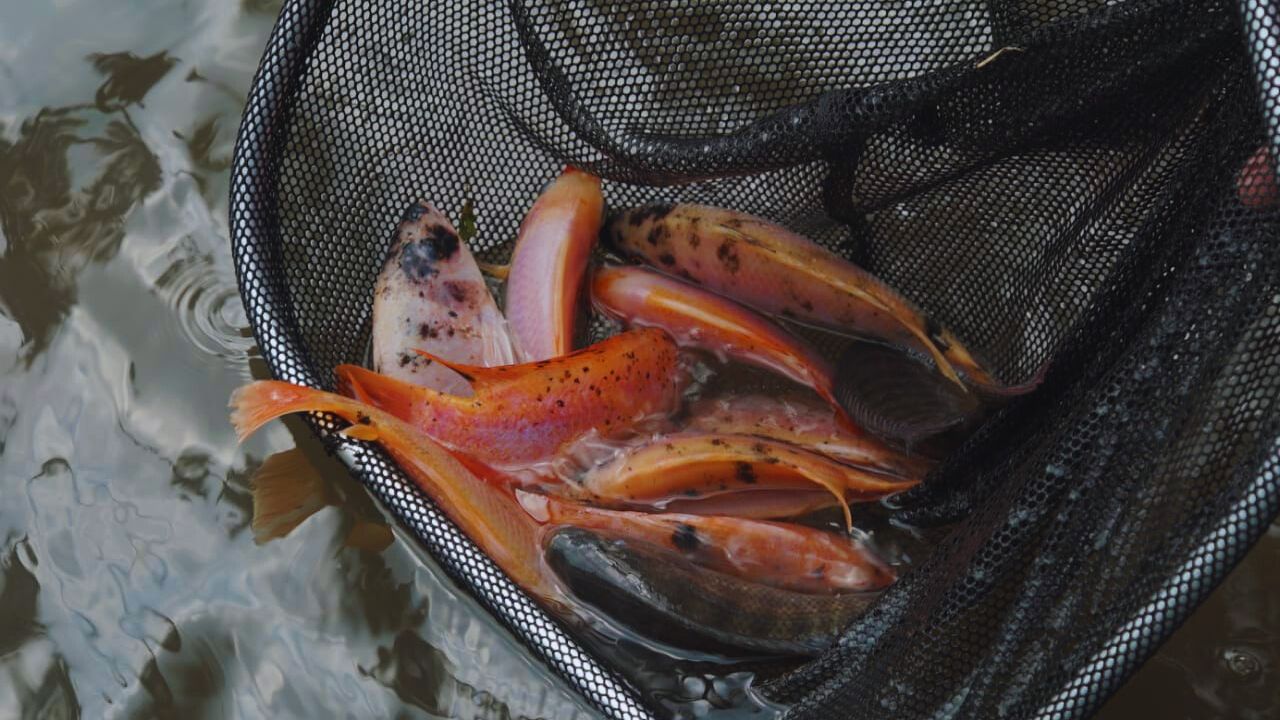
The harvest of red tilapia fingerlings following the nursery phase: BPPSDM
Throughout the tilapia farming process, it is essential to manage each step and stage carefully to ensure the production of high-quality fry that are ready for subsequent growth and breeding. Close monitoring of water quality, proper feeding practices, and effective disease control are crucial for ensuring the survival and optimal development of tilapia fry. By adopting best practices in tilapia aquaculture, fish farmers can maximize production outcomes and achieve their business objectives successfully.